
In short: To find the right distributor or business partner in Africa, choose the market and regional hub first and the partner second. Africa is 54 countries with different languages, legal systems, currencies and regulators, and most international suppliers serve it through a handful of hubs rather than 54 separate entries.
- Language and law: your target country decides the language of your labels, the law governing your contract and how you get paid.
- Hubs: Southern Africa usually runs through South Africa, West Africa through Nigeria, Ghana and Côte d’Ivoire, and East Africa through Kenya. North Africa is often a separate strategy.
- Exclusivity: regional exclusivity is common, but tie it to a defined territory, performance targets, a fixed term and clear exit terms.
- Ownership: keep trademarks and product registrations in your own company’s name.
- Local rules: check requirements such as B-BBEE in South Africa or local content rules in Nigerian oil and gas before you choose a structure.
Trade between Türkiye and Africa has grown roughly sevenfold in two decades, from USD 5.4 billion in 2003 to about USD 40 billion by the end of 2025. [1] [2] Turkish contractors had undertaken 2,031 projects on the continent by the end of 2025, and Turkish exports to Africa reached USD 13.3 billion in the first seven months of 2026. [1] [3] The opportunity is real, for Turkish exporters and for international suppliers alike.
Yet many first approaches stall for the same reason: the company treats “Africa” as one market. It is not. The most important decision you will make is not whether to enter Africa, but where, through whom and on what terms.
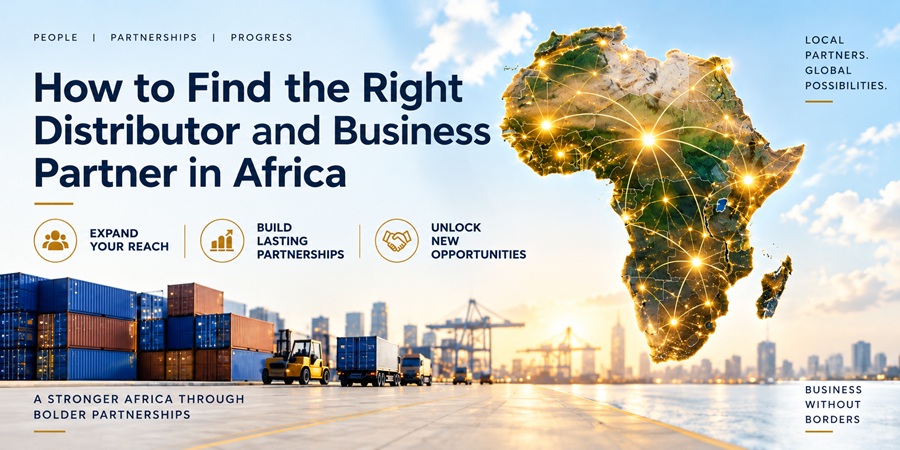
Start with the map: how do African markets differ?
African markets differ by language, legal tradition, currency and trade bloc, and colonial history still shapes how business is done. These differences decide what language your labels and manuals need, which law governs your distribution agreement, how you get paid and who you sit across the table from.
| Market group | Examples | Language and legal tradition | What to plan for |
|---|---|---|---|
| Anglophone | South Africa, Nigeria, Ghana, Kenya | English; mostly common-law traditions (South Africa has a mixed legal system) | English-language contracts and courts, with rules that still vary by country |
| Francophone | Côte d’Ivoire, Senegal, Cameroon | French; civil law, with OHADA business law in its 17 member states [6] | French documentation; CFA franc currencies pegged to the euro in many markets [7] |
| Lusophone | Angola, Mozambique | Portuguese; civil-law tradition | Portuguese labels, manuals and contracts |
| North Africa | Egypt, Morocco, Algeria, Tunisia | Arabic, with French widely used in the Maghreb | Shorter logistics from Türkiye; Türkiye has free trade agreements with Egypt, Morocco and Tunisia [5] |
Currency arrangements can also move. Mali, Burkina Faso and Niger have discussed replacing the CFA franc, but in March 2026 Mali’s finance ministry rejected claims that a common currency was about to launch, and all three remained in the West African monetary union. [7]
The continent is also organised into trade blocs. The Southern African Customs Union (South Africa, Botswana, Namibia, Lesotho and Eswatini) shares a common external tariff. [8] ECOWAS in the west and the East African Community in the east have their own rules.
The African Continental Free Trade Area (AfCFTA) is moving forward: 50 of its 54 signatories had ratified it as of December 2025. [9] But it is not yet a blanket zero-tariff zone, and slow customs procedures, inconsistent standards and red tape are often a bigger obstacle than the tariffs themselves. [10] Plan for the Africa of today, not the one in the brochures.
Which regional hubs do suppliers use to serve Africa?
Most international suppliers do not enter 54 markets. They enter a handful of hubs and serve the surrounding region from there, so the hub decision often comes before the partner decision.
| Region | Usual hub | Why it is used | Typical reach |
|---|---|---|---|
| Southern Africa | South Africa | The continent’s deepest financial system, established distribution networks and the port of Durban | Botswana, Namibia, Zambia, Zimbabwe, Mozambique |
| West Africa | Nigeria, Ghana, Côte d’Ivoire | Nigeria offers population scale; Ghana offers stability and hosts the AfCFTA Secretariat [10] | Côte d’Ivoire is the gateway to Francophone West Africa |
| East Africa | Kenya | Nairobi is the commercial centre and the port of Mombasa feeds the interior | Uganda, Rwanda and beyond |
| North Africa | Egypt, Morocco | Close to Türkiye in logistics and culture, and often run as a separate strategy | Country-by-country coverage is common |
For Turkish exporters, North Africa already carries the most weight. Morocco was Türkiye’s largest African export market in the first seven months of 2026, at about USD 2.4 billion, with Egypt close behind at about USD 2.3 billion. [3] [4] Egypt is Türkiye’s largest trading partner on the continent. [11]
Mauritius plays a different role. It is a structuring and financial gateway rather than a consumer market, with a wide treaty network and a free trade agreement with Türkiye. [5]
Distributor, agent or business partner: which do you need?
A distributor buys and resells your product, an agent finds customers for a commission, and a local business partner shares ownership or a local entity with you. The right choice depends on how much stock, risk and control you want to keep.
| Route | How it works | Usually suits | Main trade-off |
|---|---|---|---|
| Distributor | Buys from you, resells in its own name, and normally holds stock | Products that need local stock, credit terms or after-sales service | Less direct control over pricing and customer relationships |
| Commercial agent | Introduces buyers and earns commission while you sell and invoice directly | Project sales, capital equipment and a small number of large buyers | You carry more of the delivery, import and credit burden |
| Local business partner or joint venture | Shares ownership of a local entity or operation | Local production, long-term commitment or sectors with ownership rules | Highest commitment, and the hardest route to unwind |
Where can you find distributor candidates in Africa?
The best candidates usually already sell to your target customers, so start with the market rather than with a directory. Build a long list from several of these channels, then meet the shortlisted companies in their market before you sign.
- End customers: ask target buyers who supplies them with adjacent products and who they trust for service.
- Non-competing suppliers: companies selling to the same customers can tell you which distributors perform.
- Official and trade channels: use commercial attachés, chambers of commerce and business councils. Türkiye’s business councils cover 49 African countries. [1]
- Sector trade fairs: regional fairs show who is active in your category and which brands they already carry.
- Local advisers: an adviser with market presence can test reputations and make introductions that a cold email will not.
Should you give a distributor regional exclusivity?
Regional exclusivity is common in Africa because many markets are individually small, but it should be earned, not given away at the first meeting. Setting up a warehouse, registering products, training sales staff and offering after-sales service in a country of a few million people rarely pays for itself on one market alone.
That is why distribution is usually handed to one company that manages a whole region. The distributor gets the volume to justify its investment. You get one accountable partner instead of ten small ones. A sound agreement includes:
- A clearly defined territory, country by country.
- Minimum performance targets, with the right to remove exclusivity if they are missed.
- A fixed initial term, with a review rather than automatic renewal.
- Trademarks and product registrations held in your company’s name, not the distributor’s. A registration held by a partner can lock you out of the market if the relationship ends.
- Clear exit terms, including what happens to stock and customer relationships.
How do local partner rules change your choice?
In several African markets, who your partner is matters as much as what they can do, because ownership and local content rules can decide whether you can win the business at all.
South Africa: Broad-Based Black Economic Empowerment (B-BBEE)
B-BBEE is a South African government policy, set in law since 2003, that encourages companies to bring Black South Africans, who were excluded from the economy under apartheid, into ownership, management, skills development and supply chains. “Black” is a legal term here, covering African, Coloured and Indian South Africans and, following a 2008 High Court ruling, Chinese South Africans, subject to citizenship criteria. [14] Companies are scored and rated from Level 1 (best) to Level 8; below that, a company is non-compliant. [13]
For most private businesses, B-BBEE is not a legal obligation. [12] In practice it matters a great deal: buyers earn points for purchasing from well-rated suppliers, so a partner’s rating can decide whether you are even considered for government, state-owned enterprise and large corporate contracts. This is not box-ticking. It is a deliberate policy to repair a deliberate exclusion, and partners who understand it well bring real access.
Some sectors carry specific ownership requirements. The 2018 Mining Charter requires a minimum 30% BEE shareholding for new mining rights. [15] A draft bill published in May 2025 proposed changes to South African mining law, so check the current position with counsel before you rely on any figure. [16]
Nigeria and other markets
In Nigeria, the Oil and Gas Industry Content Development Act 2010 sets requirements for local participation in oil and gas. [17] Other countries restrict certain sectors or set local ownership thresholds. Check these rules before you choose a structure, because retrofitting compliance is costly.
What if the industry doesn’t exist in your target country yet?
Some African countries have no local industry in the sector a supplier is looking for. There may be no specialised distributor, no service technicians and no existing buyers who know your product category.
That does not always mean “stay away”. It can mean serving the country from a regional hub, partnering with an adjacent industry or, for the right company, being the first mover and building the category. But you need to know which situation you are in before you spend on market entry.
How do you choose the right partner? A six-point checklist
Choose the partner that can prove its track record, coverage, finances, regulatory capability and integrity, not simply the one offering the widest territory. Before signing, ask:
- Track record: Have they built a brand like yours in this category?
- Conflicts: Which other principals do they represent? Do any compete with you?
- Footprint: Do they have warehousing, logistics and sales coverage across the territory they claim?
- Financial health: Can they carry stock, offer credit terms and access foreign currency?
- Regulatory capability: Can they handle product registration and import licensing?
- Integrity: Have you done proper due diligence, including references and anti-corruption checks?
How can Anatrica Partners help?
Anatrica Partners helps Turkish and international companies choose African markets and find partners there. We have offices in Istanbul and Johannesburg. Our on-continent presence is in South Africa. Through our partnership with Kili Partners, we also have people on the ground in Africa’s major commercial cities, with country coverage agreed for each mandate. We can offer you:
- Market intelligence and research on the countries you are considering.
- Clarity on where demand and local industry exist, and where they don’t, so you choose the right market and hub for your product.
- Qualified leads and vetted partners and distributors for you to meet in each market.
- Support structuring agreements that protect your brand, your registrations and your margins.
Considering an acquisition instead of a distributor? Read Buying a Business in South Africa. Ready to build sales in a chosen market? See our Africa market entry and business development services.
Frequently asked questions
How do I find a reliable distributor in Africa?
Choose the target market and regional hub first, then build a list from end customers, non-competing suppliers, trade bodies, sector fairs and local advisers. Meet shortlisted companies in their market and carry out due diligence, including references and anti-corruption checks, before you sign.
Do I need a local partner to sell in Africa?
Not always. It depends on the country, sector and route to market. In South Africa, B-BBEE is not a legal obligation for most private businesses, yet a partner’s rating can strongly affect access to government and large corporate contracts. Other countries set sector-specific ownership or local content rules, so check them market by market.
Should a distributor in Africa get exclusive rights?
Exclusivity can be justified when a distributor invests across a region, but it should come with a defined territory, performance targets, a fixed initial term and clear exit terms. Include the right to remove exclusivity if targets are missed.
Who should own product registrations and trademarks in an African market?
Your company should keep them in its own name wherever local rules allow. If a distributor holds a product registration, you can be locked out of the market when the relationship ends.
Does the AfCFTA mean zero tariffs across Africa?
No. Fifty of the 54 signatories had ratified the agreement as of December 2025, but implementation is uneven and it is not yet a blanket zero-tariff zone. Non-tariff barriers such as slow customs procedures can matter more than the tariffs, so confirm the treatment of your product in each market.
Which African country is the best hub for a distributor?
There is no single best hub. South Africa is the usual base for Southern Africa, Kenya for East Africa, and Nigeria, Ghana or Côte d’Ivoire for West Africa. Egypt and Morocco often anchor a separate North Africa strategy. Your product, language needs and logistics should decide.
Sources
[1] Türkiye-Africa trade reaches $40B as ties deepen across continent — Türkiye Today, 26 May 2026
[2] Türkiye aims to achieve $40B in trade with Africa in 2025: Bolat — Daily Sabah, October 2025
[3] Turkish exports to Africa top $13B on strong diplomatic, trade efforts — Daily Sabah, 20 August 2026
[4] Türkiye’s exports to Africa rise 12.6% to $13.3bn in seven months — MyJoyOnline, 20 August 2026
[5] Istanbul to Host 5th Turkish-Africa Economic Forum — allAfrica, 7 October 2025
[6] History of OHADA — OHADA
[7] No New Currency for West African States — Currency News, 5 March 2026
[8] Southern African Customs Union (SACU) — Office of the US Trade Representative
[9] Ghana African Continental Free Trade Area (AfCFTA): December 2025 Update — US International Trade Administration
[10] AfCFTA Implementation 2026 — All Business Africa, 12 April 2026
[11] Türkiye’s exports to Africa surge as trade diplomacy, economic cooperation strengthen — Hürriyet Daily News
[12] B-BBEE consulting services — RSM South Africa
[13] Making BBBEE compliance work for your business — Nedbank
[14] Chinese South Africans qualify for BEE, court rules — Mail & Guardian, 18 June 2008
[15] Mining Charter finally gazetted — SAnews, 27 September 2018
[16] Proposed overhaul of South African mining law regime — White & Case
[17] Nigerian Oil and Gas Industry Content Development Act 2010 (full text) — FAOLEX
Last updated: 3 November 2026
This article is for general information only and does not constitute legal, tax or investment advice. Rules vary by country and change over time, so confirm the requirements for your product and market with local advisers.